
Running a business requires a steady stream of decisions about clients, finances, priorities, and where your attention belongs. When an aging parent begins needing help and caregiving, another set of responsibilities enters that already full life. At first, it might mean arranging an appointment or picking up groceries, but those tasks can gradually become something much larger. Before you have fully recognized the change, you may be trying to lead your business while navigating care decisions, family expectations, and unfamiliar emotional territory.
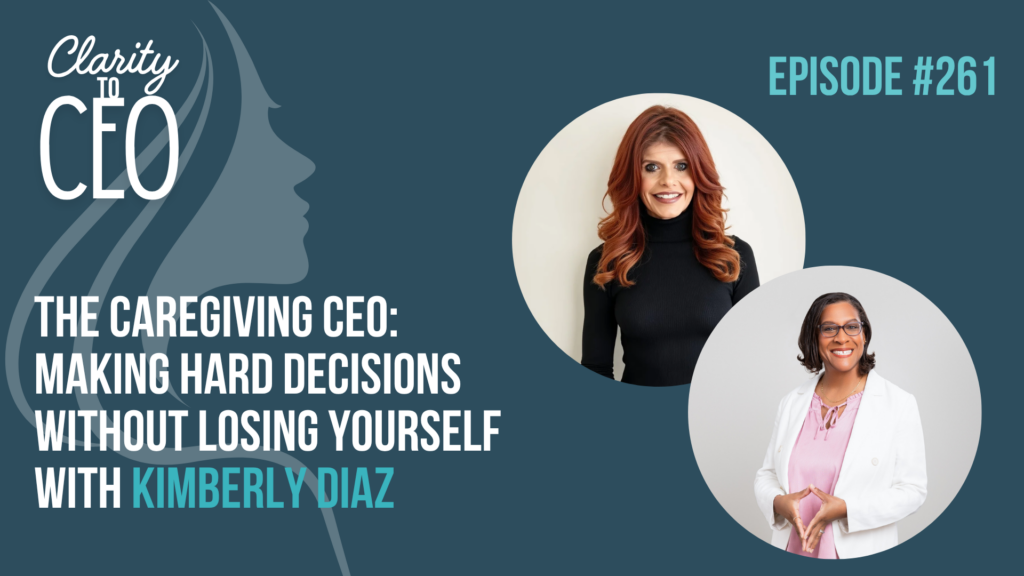
In this episode of Clarity to CEO, I spoke with Kimberly Diaz, a registered nurse, certified dementia practitioner, and care navigator with nearly three decades of nursing experience. Our conversation explored what happens when caregiving changes your capacity and how to make difficult decisions without disappearing into the responsibility. Although we discussed dementia and aging parents, the leadership questions reach into the way we build and run our businesses. What happens when the person everyone depends on needs support herself?
Listen
Watch
When Helping Becomes a Role You Never Prepared For
Kimberly described how easily adult children can become caregivers without ever making a conscious decision to take on that role. One responsibility leads to another, and the expectations grow alongside the work. You may be managing appointments, coordinating with siblings, and helping with everyday needs while still trying to maintain the same commitments in your business. The calendar can look familiar even though the demands behind it have changed considerably.
Recognizing that change matters because your capacity affects the decisions you can make and the commitments you can reasonably maintain. During our conversation, Kimberly described people setting aside careers because they could no longer manage everything. For an entrepreneur, that possibility raises an uncomfortable question about how much of the business depends on her personal availability. It also invites an earlier conversation about support, before exhaustion begins making decisions on her behalf.
The Decisions Carry More Than Today’s Circumstances
One of Kimberly’s most meaningful observations was that caring for a parent also means carrying the history of that relationship. A decision about care may bring up longstanding expectations, unresolved hurt, or the familiar pressure to be the dependable child. Even in loving families, the change in roles can involve grief as the person you once turned to for guidance begins depending on you. Those layers help explain why a decision that appears practical from the outside can feel deeply complicated from within.
This part of the conversation deserves attention because caregiving decisions rarely happen in emotional isolation. You may be responding to what your parent needs today while also feeling the weight of who you have always been in the family. Kimberly and I discussed how those roles can influence conversations among siblings and expectations about who will take responsibility. Recognizing that history creates room to consider what the current situation actually requires and where other people can contribute.
Making Decisions When You Have Less Left to Give
Business owners are accustomed to making decisions throughout the day, but caregiving adds another category of choices that can feel especially consequential. Kimberly shared how she sometimes tells her husband that she is operating at about 20 percent after a demanding day. That simple admission gives the people around her a more accurate understanding of what she has available. It also challenges the assumption that being responsible means maintaining the same capacity regardless of circumstances.
We also discussed the pressure to make the perfect choice when the information is incomplete and the situation keeps changing. Kimberly’s approach is to make the best decision she can with what she knows in that moment, then respond differently when she learns more. Entrepreneurs can recognize that tension, especially when looking back at a decision with information they did not have at the time. The conversation offers a thoughtful reminder to account for the resources, knowledge, and energy that were actually available when the choice was made.
Letting Support Become Something Specific
When people offer help, it can be surprisingly easy to respond that everything is fine. Kimberly encouraged listeners to give those offers somewhere useful to go, whether that means a meal, a grocery run, or another practical responsibility. Her examples brought the discussion back to the everyday work that can quietly consume a caregiver’s time. Accepting a specific contribution gives someone a way to participate and gives you one less responsibility to manage personally.
That same willingness to share responsibility matters in business. During the episode, we considered what happens when reduced availability reveals how much depends on the owner doing everything herself. We also talked about beginning conversations early so that support feels more familiar when circumstances change. Those conversations cannot remove every difficulty, but they can help families and business owners approach the next decision with a clearer understanding of who can help.
A Leadership Question Worth Considering Now
The question I returned to at the end of this interview was whether we have built businesses that can support our lives when our lives need more from us. Caregiving makes that question immediate, but it is worth considering before a difficult season arrives. Strategic clarity includes recognizing what deserves your attention, what requires your leadership, and what you no longer need to carry alone. That recognition can shape both the support you accept today and the conversations you begin for tomorrow.
Listen to The Caregiving CEO: Making Hard Decisions Without Losing Yourself with Kimberly Diaz on the Clarity to CEO Podcast for the full conversation. Kimberly shares more about family relationships, decision fatigue, preparing for changing care needs, and finding support. You can also connect with her at kimberlydiazrn.com and explore her caregiver quiz at agingparentstoolkit.com.