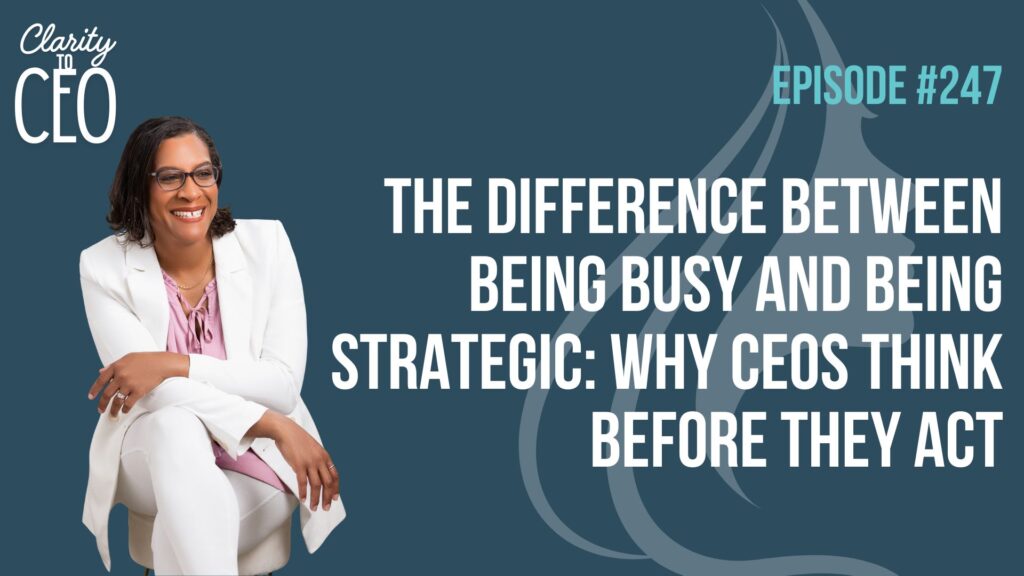
Did you know that there is a difference between being busy and being strategic? If you’ve ever reached the end of a long workday wondering where the time went, you’re not alone. Many entrepreneurs spend their days solving problems, responding to emails, attending meetings, and checking off task after task. Their calendars are full, yet their biggest business goals still seem just out of reach.
It’s easy to assume that working harder is the answer. After all, business ownership requires commitment, and there will always be more to do than there are hours in the day. But there comes a point when more activity no longer creates more progress. That’s where the distinction between being busy and being strategic becomes so important.
Activity Doesn’t Always Create Progress
One of the greatest challenges entrepreneurs face is confusing motion with momentum.
A full schedule can create the feeling that we’re moving the business forward. Yet activity alone doesn’t guarantee growth. In fact, staying constantly occupied can leave very little space for the kind of thinking that sustainable leadership requires.
As businesses grow, so do the number of decisions demanding a leader’s attention. Without intentional priorities, every opportunity begins to feel equally urgent, and every request competes for valuable time and energy.
Eventually, it’s easy to find yourself reacting to the business instead of leading it.
Strategic Leadership Looks Different
Strategic leadership isn’t about doing less simply for the sake of doing less.
It’s about becoming more intentional with the work that only you, as the CEO, can do.
That includes creating time to evaluate business performance, strengthen your offers, improve the client experience, and think carefully about where the business is headed—not simply where it is today.
The goal isn’t a perfectly organized calendar.
The goal is ensuring that your calendar reflects your priorities rather than your interruptions.
When leaders consistently protect time for strategic thinking, they make better decisions. And better decisions create stronger businesses.
A Different Way to Measure Success
Many entrepreneurs measure success by how productive they feel.
But leadership asks a different question.
Instead of asking, How much did I accomplish today?, consider asking, Did my work move the business closer to its long-term strategy?
That subtle shift changes how decisions are made.
It encourages leaders to look beyond completing tasks and instead focus on creating lasting value.
Over time, this mindset builds confidence, clarity, and a business that grows by design rather than by reaction.
A Simple Reflection
As you think about your own business, take a moment to consider these questions:
- What am I consistently busy doing?
- Which activities directly support my long-term strategy?
- Where am I reacting instead of leading?
- What deserves more strategic attention this quarter?
The answers often reveal more about our leadership than our calendars ever could.
Continue the Conversation
This article introduces one of the most important leadership shifts entrepreneurs can make, but the full conversation goes much deeper in this week’s episode of the Clarity to CEO Podcast.
In the episode, Philippa Channer explores why entrepreneurs often mistake activity for progress, how reactive leadership quietly limits business growth, and practical ways to evaluate whether your daily work is truly aligned with your long-term strategy.
If your calendar feels full but your business isn’t moving forward in the way you’d hoped, this conversation is for you.
After listening, we also invite you to explore the Strategic Clarity Workshop, where you’ll learn how to align your marketing, leadership, and business decisions around a clear strategic foundation rather than simply increasing activity.
Because your business doesn’t need a busier leader.
It needs a clearer one.