As entrepreneurs, it’s easy to become so focused on serving others that we lose sight of the person behind the business. But success shouldn’t cost you yourself.
For many women, leadership extends far beyond their businesses. They are supporting clients, leading teams, caring for families, mentoring others, and carrying responsibilities that often remain invisible to everyone else. While this level of commitment is admirable, it can also become unsustainable if the business is continually asking more from its leader than the leader can realistically give.
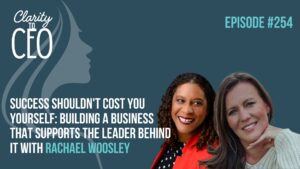
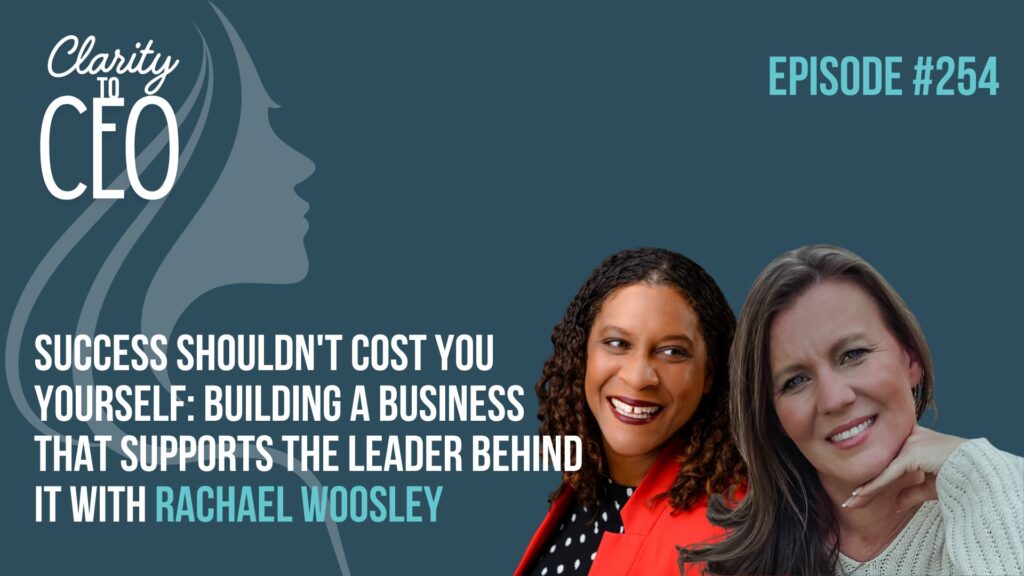
In this episode of the Clarity to CEO Podcast, I sat down with Rachael Woosley, leadership coach, retreat facilitator, and founder, to explore what it means to build a business that supports the leader rather than consumes them. Drawing on her own experience of burnout and business evolution, Rachael shares thoughtful insights about leadership, intentional growth, and creating space for the people who spend their lives holding space for everyone else.
When Success Looks Good but Doesn’t Feel Sustainable
From the outside, a business can appear successful while quietly placing an unsustainable burden on its owner.
Rachael reflected on how years of leading networking communities, supporting entrepreneurs, and organizing events eventually led her to question whether the business she had built was also supporting her. The work was meaningful, but the pace, expectations, and constant responsibility left little room for rest or reflection.
That experience prompted an important question for every entrepreneur:
Is your business supporting your life, or is your life simply supporting your business?
Sustainable leadership requires more than achieving milestones. It requires creating a business that allows its owner to continue leading with clarity, purpose, and energy over the long term.
Leadership Begins with Self-Awareness
One of the themes throughout our conversation was the importance of understanding how we show up as leaders.
Rather than automatically responding to every opportunity or expectation, Rachael encourages leaders to become more aware of how they are making decisions. Developing greater awareness of our own responses can help us recognize when we are leading from pressure instead of intention.
For many entrepreneurs, slowing down enough to notice these patterns creates the opportunity to make different choices—choices that are better aligned with the business and life they are intentionally trying to build.
The Difference Between Transactional and Relational Leadership
Another important discussion centered on the difference between transactional relationships and genuine connection.
Entrepreneurship often encourages constant visibility, networking, and growth. While these activities certainly have value, they are not always the same as building meaningful professional relationships.
Rachael shared how stepping away from a highly visible role revealed which relationships remained when there was nothing to promote or organize. That experience reshaped her understanding of leadership and reinforced the importance of cultivating relationships built on trust rather than convenience.
For business owners, this distinction matters. Strong businesses are built through authentic relationships, thoughtful collaboration, and mutual support—not simply through increasing visibility.
Creating Space to Be More Than Your Role
One of the most thought-provoking moments in our conversation explored what Rachael describes as “the sacred art of being unneeded.”
Many entrepreneurs naturally become the person everyone depends on. Clients rely on them. Team members seek their guidance. Family members look to them for support. Over time, that identity can become difficult to separate from who they are as individuals.
Creating intentional space where every decision, solution, or responsibility does not depend solely on you can be an important step toward healthier leadership. It allows business owners to move beyond constant responsibility and reconnect with the creativity, reflection, and strategic thinking that often inspired them to build their businesses in the first place.
Building a sustainable business also means building systems, boundaries, and expectations that allow the business to continue functioning without requiring the owner to carry every responsibility personally.
Choosing Collaboration Over Competition
Our conversation also explored the role collaboration can play in sustainable business growth.
It is easy to believe that every opportunity must be protected or every entrepreneur must be viewed as a competitor. In reality, some of the strongest professional relationships are formed through collaboration.
When leaders are willing to share ideas, support one another, and build genuine partnerships, they often create opportunities that benefit everyone involved. Collaboration becomes less about immediate transactions and more about creating long-term value through shared expertise and mutual trust.
This mindset reflects intentional leadership—one that prioritizes relationships over scarcity and sustainable growth over constant comparison.
Continue the Conversation
This conversation with Rachael Woosley is a thoughtful reminder that success should never require sacrificing your wellbeing or your sense of self.
If you’ve been questioning whether your business still reflects the life you want to lead, this episode offers valuable perspective on creating sustainable leadership, building meaningful relationships, and designing a business that supports both your growth and your wellbeing.
Listen to the full episode of the Clarity to CEO Podcast to hear our complete conversation.
You can also connect with Rachael Woosley and learn more about her work:
- Website: https://rachaelwoosley.com/
- LinkedIn: https://www.linkedin.com/in/rachaelwoosley/
If you’re ready to move from busy operator to intentional CEO, I also invite you to check out my Strategic Clarity Insider Experience, where we explore how better decisions create stronger, more sustainable businesses.